Spreadsheets vs Cloud Accounting for UK Sole Traders: Which Path Leads to Success?

Updated: Aug 12
When you first register as a UK sole trader, simplicity and cost control are your top priorities. In those early days of launching a venture, managing your finances feels entirely manageable with simple, free tools. This is why a vast majority of new business owners rely on a self-employed tax expenses excel template to track their incoming revenue and outgoing operational costs. At first glance, this approach seems incredibly easy, familiar, and highly cost-effective. After all, spreadsheets cost nothing, require no software subscriptions, and give you a clean, simple grid to type in your numbers.
However, as your business grows, your transaction volume increases, and your customer list expands, an invisible shift occurs. What once felt like a quick, harmless weekend task can quickly turn into a stressful, unbillable bottleneck of administrative dread. The exact spreadsheet template that worked perfectly fine when you had a handful of transactions suddenly degrades into a complex, messy maze of manual data entry, broken formula errors, and incredibly time-consuming bank reconciliations.
At Red Parrot Accounting Ltd, supporting sole traders and freelancers across Swindon, London, and the wider UK, we see this exact tipping point happen every day. Business owners end up sacrificing their evenings and weekends to act as unpaid data entry clerks, constantly worrying if they've made a math error that could trigger an HMRC inquiry. This comprehensive guide explores the structural traps of relying on spreadsheets, breaks down the monumental digital compliance shifts happening across the UK, and details exactly how modern accounting software offers a faster, safer, and far more profitable path forward.

The Hidden Risks of Using Excel for Sole Trader Accounts
Excel spreadsheets are a default starting point for many UK businesses because they are completely free, highly flexible, and incredibly familiar. Yet, behind that comfortable interface lies a minefield of significant structural risks that can cause catastrophic operational headaches as your business expands.
The Human Error Factor and Formula Fragility
The single greatest threat to manual bookkeeping is the incredibly high chance of human error. When you use a standalone self-employed tax expenses excel template, your entire financial compliance relies on perfect manual entry. Unlike dedicated accounting software, a spreadsheet does not feature built-in safeguards, automatic data validation, or intelligent alerts when an entry looks wrong.
A single mistyped digit, an accidental double entry, or a broken cell formula can silently ripple through your entire workbook, completely throwing off your net profit margins and tax liability calculations. This lack of automated oversight means sole traders must remain perpetually vigilant and highly skilled in spreadsheet management—a standard that is completely unrealistic for a busy business owner focusing on delivering client results.
The Deadline Nightmare: Lost Time and HMRC Penalties
These minor spreadsheet mistakes are far more than just a minor inconvenience. They can lead directly to inaccurate tax returns, missed allowable expenses that could have saved you money, or severe financial penalties from HMRC for filing careless returns.
Imagine the sheer panic of sitting at your desk on January 30th—just 24 hours before the strict Self Assessment deadline—desperately trying to locate a corrupted cell or a missing bank transaction instead of finalizing your revenue numbers. Every single hour you spend auditing a broken, manual grid file is completely unbillable. You are effectively burning valuable time that should be spent on revenue-generating client work, meaning that "free" spreadsheet is actually draining your business's true earning potential.
Understanding Making Tax Digital and Its Impact on Sole Traders
Beyond the daily operational risks of human error and lost administrative hours, there is a massive regulatory shift making manual record-keeping entirely obsolete for UK businesses. HM Revenue and Customs (HMRC) is actively rolling out its sweeping Making Tax Digital initiative, which fundamentally reshapes how sole traders, freelancers, and landlords must track, manage, and submit their tax information.
The Legal Timelines and Thresholds
Making Tax Digital for Income Tax Self-Assessment (MTD for ITSA) is officially live. The government now legally mandates that any self-employed individual or landlord with a gross qualifying income (total turnover before expenses) exceeding £50,000 must completely abandon traditional annual manual filings. Instead, they are required by law to maintain digital records and utilize HMRC-compatible software to submit formal updates.
This is just the first wave of a phased rollout. The strict qualifying income thresholds are scheduled to drop significantly over the coming years, pulling nearly two million more micro-businesses into the mandate:
April 2027: The threshold drops to £30,000.
April 2028: The threshold drops down to £20,000.
This phased timeline means that even smaller, part-time sole traders and independent freelancers will very soon be legally required to adopt modern digital accounting solutions. Are you a sole trader who also manages a rental portfolio? Read our [2026 Landlord Tax Survival Guide] to see exactly how these digital rules and thresholds apply to your investments.
Why Spreadsheets Are a Compliance Dead-End
Under these strict new MTD rules, relying on a standard, standalone spreadsheet is a legal compliance dead-end. HMRC will no longer allow you to simply log into your online portal once a year and manually type your end-of-year totals into a box.
Instead, MTD mandates that you submit four separate quarterly updates throughout the financial year, followed by a final end-of-period digital declaration. This means moving from one annual submission to five digital filings every single year.
Crucially, these submissions must be transmitted via automated, functional digital links directly from an approved software application to HMRC’s central API platform. A traditional Excel sheet simply cannot communicate with HMRC's servers in this way. Failing to comply with these rules or attempting to stick to paper and manual records leaves your business vulnerable to late-submission point penalties, automatic financial fines, and increased regulatory scrutiny.
Why Cloud Accounting Software Outperforms Manual Spreadsheets
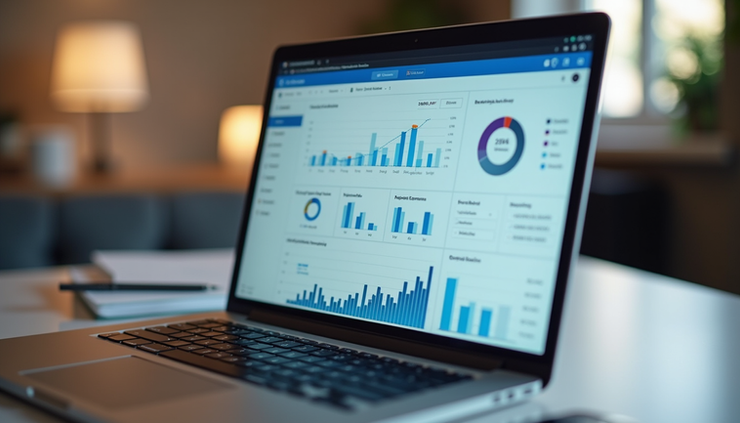
When ambitious sole traders hit a wall with manual data entry and ask, “Which software is best for managing self-employed tax?” the answer almost always comes down to two industry-leading cloud platforms: Xero and QuickBooks. These modern accounting software solutions do not just digitize your paperwork—they completely transform your business operations, offering massive strategic advantages over flat, static Excel templates.
1. Automated Bank Feeds and Instant Receipt Capturing
The most immediate relief you experience when moving to cloud software is the death of manual data entry. Both Xero and QuickBooks connect directly and securely to your business bank accounts via open banking feeds. Every single transaction—whether it is a customer payment hitting your account or an ongoing business expense—is automatically imported into your ledger in real time.
Furthermore, instead of collecting physical paper receipts in a shoebox, you can use integrated mobile apps to snap a quick photo of an invoice on your smartphone. The software's intelligent OCR (Optical Character Recognition) technology instantly reads the supplier, date, and tax amount, automatically matching the receipt to the corresponding bank transaction. This eliminates hours of manual data entry and ensures you never accidentally lose a valid deduction.
2. Real-Time Tax Visibility and Cash Flow Clarity
A spreadsheet is historical; it only shows you what happened in the past, and usually, you only look at it right before tax season. In stark contrast, cloud platforms provide a live, rolling snapshot of your financial health.
As your transactions import and categorize automatically, the software calculates your estimated Income Tax, National Insurance, and VAT liabilities on a live dashboard. This constant visibility completely removes the traditional "year-end panic." Instead of guessing how much money you need to set aside for HMRC, you know your exact tax position month-by-month, allowing you to manage your cash flow with absolute confidence.
3. Effortless Regulatory Compliance
As established in the previous section, manual spreadsheets cannot communicate with government portals. Cloud accounting platforms are built specifically to bridge this gap. Because they are fully recognized by HMRC as MTD-compatible software, submitting your required digital updates takes just a few clicks. The software securely packages your digital records and transmits them directly to HMRC’s API systems, completely removing the risk of data transcription errors, late penalties, or compliance gaps.
Taking the Next Step: Why Moving to Cloud Accounting Is a Smart Move
Switching your business finances away from manual spreadsheets and onto cloud accounting software is no longer just a matter of convenience or modern preference. In today’s fast-paced, highly regulated financial landscape, making the transition is a strategic and legal necessity for UK sole traders who want to survive and thrive. The ongoing risks of human formula errors, the impending quarterly demands of Making Tax Digital, and the undeniable time-saving benefits of automated data entry all point to a single, clear conclusion: cloud accounting is the absolute future of business management.
Let Red Parrot Accounting Handle the Heavy Lifting
We understand that transitioning away from a familiar spreadsheet template can feel incredibly daunting if you aren't a technology expert. The fear of disrupting your records, losing historical data, or incorrectly setting up live bank feeds often causes busy business owners to delay making the switch.
That is exactly where we come in. At Red Parrot Accounting Ltd, we specialize in helping sole traders, freelancers, and small businesses throughout Swindon, London, and nationwide migrate smoothly and seamlessly from Excel to industry-leading cloud platforms like Xero and QuickBooks.
Our expert team doesn’t just hand you a software login. We completely handle the custom migration process, construct your chart of accounts specifically tailored to your unique trade, link your automated bank feeds safely, and provide clear training. We ensure your business is fully compliant with upcoming HMRC mandates while freeing up your valuable evenings and weekends, allowing you to focus your energy entirely on what matters most—growing your business and maximizing your revenue.
Ready to upgrade your business finances? Contact the Red Parrot team today to get started.
Disclaimer: The information provided in this article is for general informational and educational purposes only and does not constitute formal accounting, tax, or financial advice. Tax laws, thresholds, and HMRC regulations are subject to change. Individual tax circumstances vary, and you should not act upon any information in this post without seeking tailored advice from a qualified professional. Contact Red Parrot Accounting Limited directly to discuss your specific requirements.


Comments